
Multifunctional website developmentfor bookings, catalogues and integrations.
We build custom WordPress websites that let customers book services, calculate prices, place orders and pay online. Multifunctional website development can also include searchable catalogues, customer accounts and CRM integrations. We agree on the features your business needs before choosing plugins or writing custom code.
We will help define the features, data connections and development stages. You do not need a technical specification to get started.
Bookings, quotes and orderson your own website.
We tailor WordPress features to services, rentals, travel or product catalogues. Start with a single module or connect several steps: choosing an item, booking, paying and sending the details to your CRM.
A booking systemwith availability checks.
Customers choose a service, date or rental period, enter their details and receive confirmation. Where needed, we add online payments, email notifications and calendar integration.
Price calculators and product configurators
We build calculations around your pricing rules. Customers enter dimensions or quantities, select options and receive a price or submit a configured enquiry. Estimates are clearly labelled when a final quote needs your review.
Help customers find the right item
We create vehicle, equipment, accommodation and travel catalogues with categories, filters and detailed listings. A catalogue can also include availability, bookings or an enquiry form.
Connect your website to the systems you use
We connect WordPress to CRM, payment, booking or delivery services when their interfaces support the required data. We define the fields, sync direction and error handling before building the integration.
Describe the action and the result you need.
We will assess whether a WordPress plugin, a customised module or custom development is the best fit.
6 development stagesfrom requirements to ongoing improvements.
Multifunctional website development covers requirements, interface design, WordPress development and integration testing. At the start, we agree on the scope, priorities and acceptance criteria so you know what is included.
Define the features and business rules.
We document booking rules, price calculations, permissions and required data. We check the capabilities of your existing CRM and API so the proposal has a defined scope.
Design a clear sequence of actions.
We design forms, filters, booking and payment steps for desktop and mobile. Validation messages and confirmations help customers understand what to do next.
Build the features and data connections.
We use suitable WordPress plugins and custom code. CRM, API, payment and calendar integrations follow the agreed requirements, including handling connection failures.
Make routine management straightforward.
Your team can manage the agreed content types, such as prices, listings, catalogues or bookings. User roles restrict access to the data and actions each team member needs.
Test successful actions and failure cases.
We test forms, calculations, availability, notifications and data exchange. Payments are checked in a test environment where the provider supports one. We review the key scenarios with you before launch.
Plan the next priorities after launch.
Maintenance, WordPress updates and additional features are agreed separately. Before adding integrations or modules, we assess compatibility with the existing website.
Tell us what you need to build or improve.
Share your current website, the features you need and the systems you use. We will help clarify the remaining requirements.
From a single featureto a custom platform.
The scope of multifunctional website development depends on the features, data and integrations required. Start with one WordPress module or plan several connected development stages.
One module for a specific task.
Suitable for adding a booking system, price calculator, product configurator or enquiry form with custom fields.
- Booking system
- Price calculator
- Rental enquiry
- Product configurator
- Custom rules and fields
You need one feature with clearly defined requirements.
Several steps in one customer journey.
Suitable for connecting a catalogue, bookings, payments and data transfer to a CRM or another system.
- Bookings and payments
- Filterable catalogue
- CRM, ERP or API integration
- Automated notifications
- Data synchronisation
A request needs to pass through several connected steps.
A tailored workspace for customers and staff.
Suitable for customer accounts, multiple user roles, documents, custom data structures and integrations.
- Customer and partner accounts
- Roles and permissions
- CRM, ERP and API connections
- Custom administration area
- Phased development
Your website needs to handle data from multiple users and systems.
Launch the first version.Then build the next features.
A 12-month partnership can combine initial development, new integrations, automation and technical support. The scope, payment terms and process for reviewing priorities are agreed in the contract before work starts.
- Features for the first version
- Further development stages
- Integrations and automation
- Technical support scope
- Priorities and timelines
The proposal sets out the development work, timeline and costs. WordPress plugin licences, external subscriptions, payment fees and other third-party costs are agreed separately. They are not automatically included in the development price.
Let’s start withwhat you need.
Describe the features you need and the systems you already use. Your selected project type will be included in the enquiry.
Websites we have builtfor rentals, travel and vehicle sales.
These projects show different examples of multifunctional website development, including manageable catalogues, booking enquiries and CRM integrations. Each description outlines the work delivered for that website.
View full portfolio↗
Baumsrent.lv
Equipment rental website
An equipment rental website with a structured catalogue, custom design and content management through WordPress.
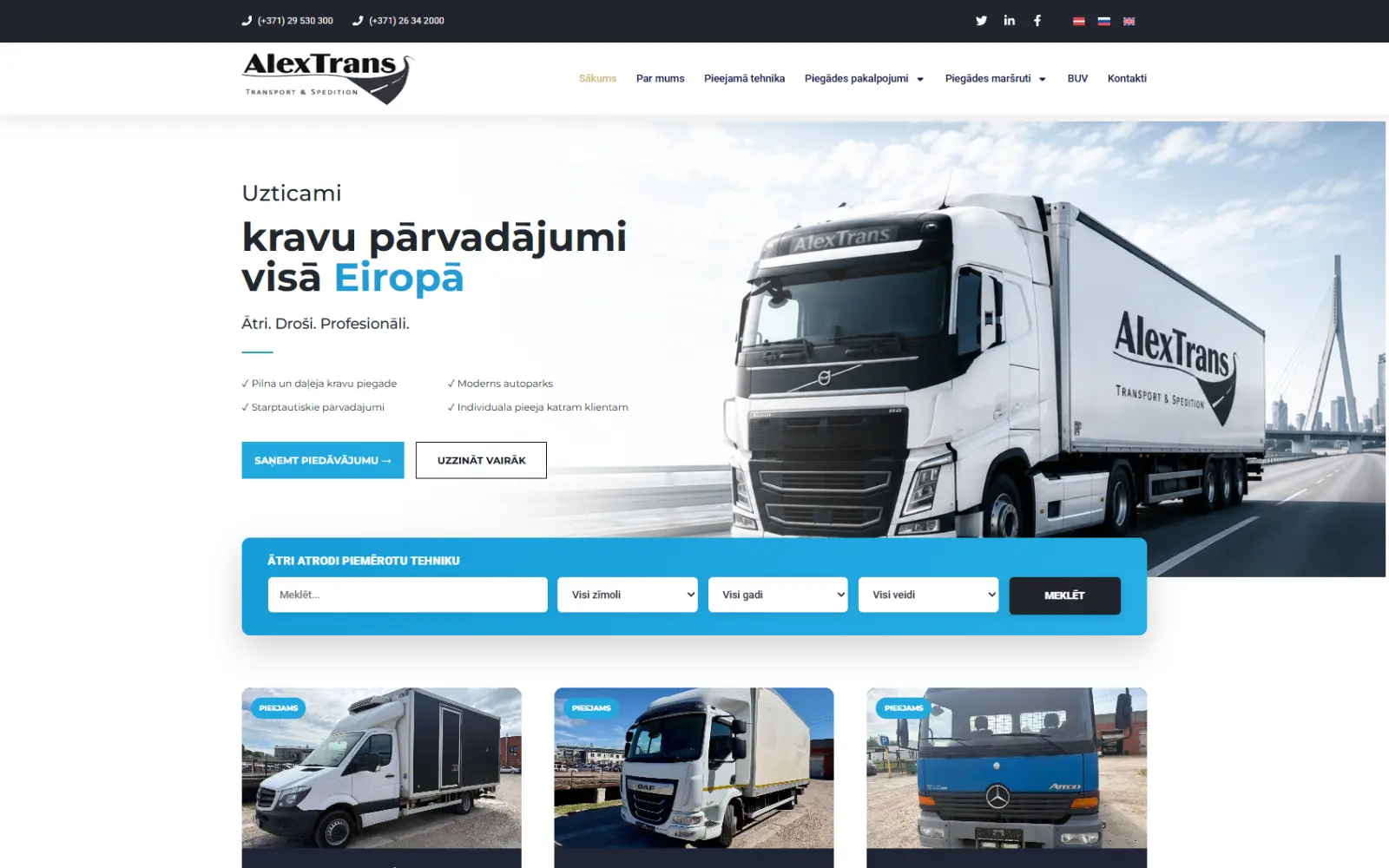
AlexTrans.lv
Vehicle sales catalogue
A company website with a vehicle catalogue. Staff can add vehicles, enter their details and publish listings through the administration area.

Ozolciems.lv
Travel website with CRM integration
A travel company website with custom design, CRM integration, SEO setup and an additional language version.

Sventesrasa.lv
Accommodation website
An accommodation website with cabin information, multiple languages and a Booking.com connection. The design follows the client’s chosen colours and includes SEO setup.
Jekabtur.lv
Travel and tour website
A travel website where staff can add tours, upload PDF itineraries and receive booking enquiries by email. The project is still being developed.
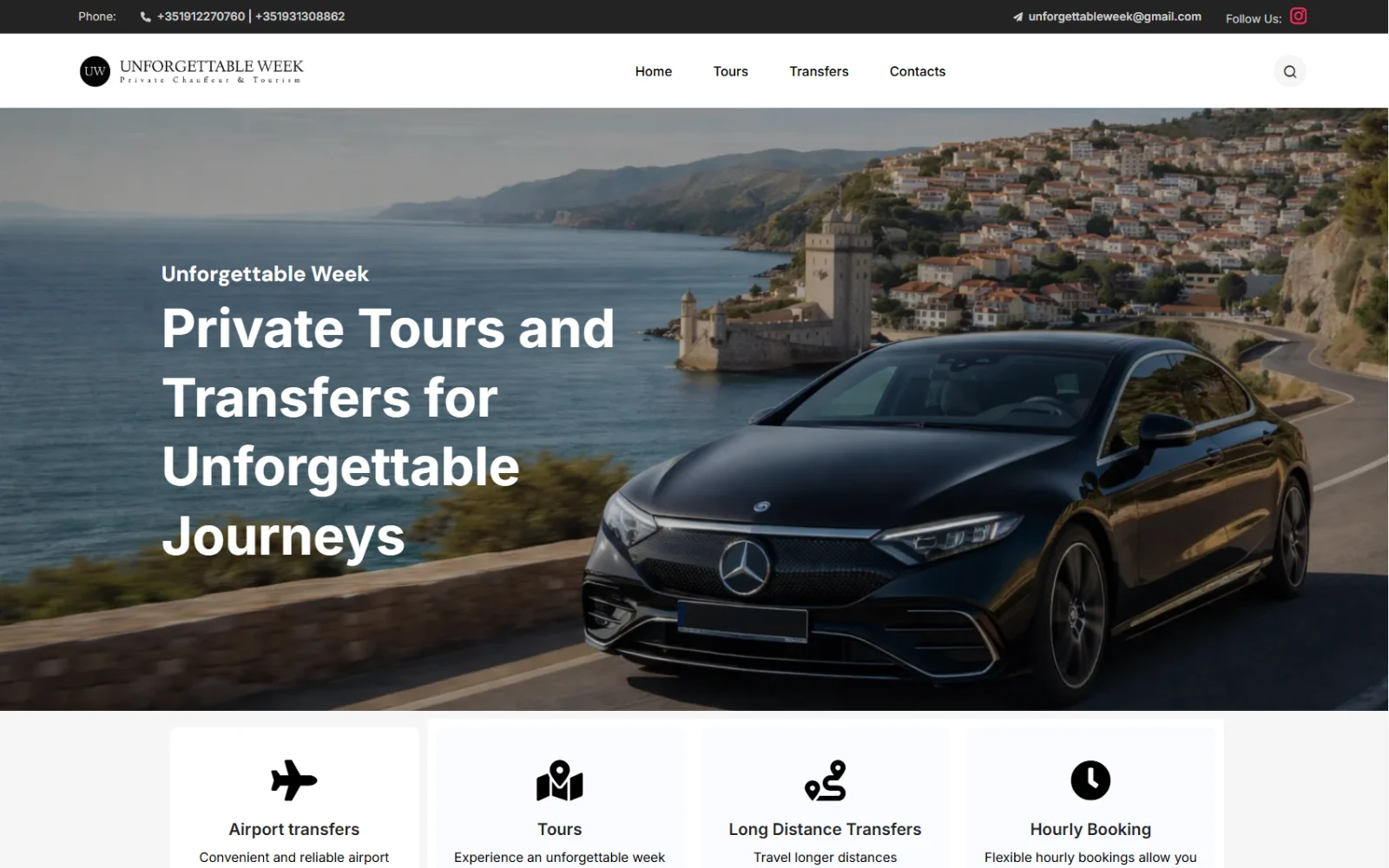
Unforgettableweek.com
Travel booking website
A website for trips in Portugal, with tour descriptions, custom design and a booking option.

Carcloud.lv
Vehicle catalogue
A vehicle catalogue with custom design and structured vehicle fields, allowing listings to be published and managed through WordPress.
Tell us which features your website needs.
Share examples, the systems you use and the data you need to manage. We will assess the WordPress features, integrations and scope required.
Before development startsclarify the scope and terms.
Multifunctional website development is a custom project. Here are answers about costs, timelines, CRM integrations, WordPress management and support after launch.
The price depends on the complexity of the features, design, integrations, data migration and language versions. To prepare a proposal, we clarify who will use the website, which data it must handle and which systems need to connect. The proposal sets out the scope, timeline and costs. WordPress plugin licences, CRM subscriptions and API usage fees are agreed separately. If the requirements are still developing, we can first define and estimate an initial development stage.
We estimate the timeline after reviewing the requirements and the capabilities of external systems. A single module needs a different amount of work from a website with customer accounts, calculations and several integrations. The plan also covers design approval, content preparation, testing and your final review. API access, missing data or changes to requirements can affect delivery. For larger projects, we can agree on a first release and develop the remaining modules in stages.
Yes, if the platform provides the required API or another supported data exchange method. Before development, we check its documentation, access requirements, available fields and request limits. We agree whether data should flow from the website to the CRM, back to the website or both ways. For example, an enquiry can create a CRM contact while availability comes from a booking system. The integration also needs error handling and checks so failed transfers can be identified.
Not always. A suitable WordPress plugin may cover standard bookings and can be configured to fit your website. Custom development is useful when you need special pricing rules, availability across several resources, user roles or unusual CRM and API connections. We compare features, licence costs and maintenance requirements before choosing an approach. Booking confirmation, cancellations, payment rules and notifications also need to be defined because they determine how the system should work in practice.
Yes, after reviewing the existing WordPress website, including its versions, theme, plugins, data structure and access. This shows whether the new feature can be added safely or preparatory work is needed. Changes to data or integrations should include a backup and testing in a separate environment. New modules, languages and CRM connections can be planned in stages. Our proposal separates any necessary work on the existing website from the development of the new features.
The manageable data is defined in the project requirements. It usually includes text, images, catalogue entries, prices, offers and bookings if a booking module is included. We provide the relevant WordPress fields and access roles, demonstrate the main tasks at handover and provide the guidance needed. Changes to calculation rules, data structures or integration logic may require a developer. Routine content management and changes to the underlying code are different tasks, so we clarify that distinction before delivery.
The maintenance scope is agreed separately. It can include WordPress and plugin updates, backups, security checks and technical fixes. Websites with CRM or booking integrations also need data exchange checks after significant changes. SEO work can cover page structure, headings, metadata, indexability checks and content improvements. Search rankings cannot be guaranteed by a single setting or a plugin score. New features and third-party licences are agreed separately from routine maintenance, so you know which work is included.